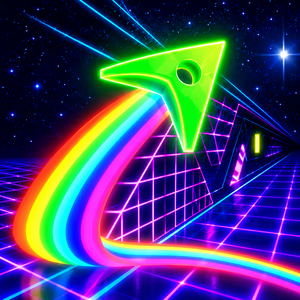
Geometry Dash Wave 3D challenges you to master every zigzag move, dodge deadly spikes, and navigate twisting 3D corridors. Can you reach the finish?
Guide Your Wave Through Obstacles in Geometry Dash Wave 3D
When developing Geometry Dash Wave 3D, the Wave mechanic was designed to define the rhythm of the entire experience. The character automatically moves forward, while you control its direction with two simple actions: pressing and releasing the button. Hold the left mouse button to make the Wave fly upward, then release it to send the character downward, creating a continuous zigzag path.
The controls are easy to learn, but mastering them is a different story. Holding the button for too long can send the Wave toward obstacles above, while reacting too slowly may leave you unable to avoid hazards below. As the pace picks up and the gaps become narrower, you must learn to feel the rhythm of each movement instead of waiting until danger is right in front of you.
The Visual Style of Geometry Dash Wave 3D
The three-dimensional environment brings a fresh perspective to the familiar Wave gameplay. Instead of viewing the course on a flat plane, you must adapt to depth, camera angles, and the relative positions of obstacles. Geometric corridors, sharp spikes, and spinning saws create a striking environment where every turn can introduce an unexpected challenge.
However, 3D is more than just a visual upgrade. The added depth can make it harder to judge distances and identify safe paths. You need to scan the course ahead, anticipate your next move, and adjust your trajectory early. This combination of immersive visuals and precise movement gives Geometry Dash Wave 3D its own distinctive feel.
How to Play Geometry Dash Wave 3D
Main Objective
Your goal is to guide the Wave through the entire course without hitting any obstacles. Each section calls for a different approach, from relatively wide corridors to tight gaps that require frequent changes in direction. Success depends not only on quick reflexes but also on remembering the course layout and choosing the right moment to move.
Controls
- Hold the left mouse button: Guide the Wave upward.
- Release the left mouse button: Guide the Wave downward.
Levels and Difficulty
According to the description of the version featured on GeometryDashS, the game includes three levels with progressively greater challenges. Together, they take you from learning the basics to mastering the Wave's movement.
Level 1: Get Familiar with the Wave
This opening stage helps you understand how the character responds to your inputs. The relatively wide paths make practice easier, giving you time to establish a steady rhythm of pressing and releasing before facing more demanding obstacles.
Level 2: Test Your Reflexes
Spinning saws and narrow gaps make it harder to adjust your trajectory. You need to look ahead, control your height, and avoid sudden or excessive movements that could send the Wave off course.
Level 3: Master Your Control
Tight corridors push your skills to another level. A turn taken too late or a button held longer than expected can end your run in an instant. Staying calm and remembering the course layout become essential as you work your way through the toughest sections.
Both Geometry Dash Wave 3D and the classic Geometry Dash Wave revolve around zigzag movement, where the timing of each press and release determines whether you survive. However, their visual presentation creates a noticeably different experience.
The classic Geometry Dash Wave uses a 2D perspective, allowing you to follow your trajectory and spot obstacles on a flat, clearly defined plane. Geometry Dash Wave 3D, on the other hand, adds depth to the environment, creating a different sense of movement while requiring you to adapt to a new perspective.
In Geometry Dash Wave 3D, reaching the finish line is only part of the challenge. The real journey lies in controlling every movement, understanding the rhythm of the course, and turning each failed attempt into a learning experience. Once you find the right balance between reflexes and careful planning, every corridor you conquer becomes another milestone worth celebrating.