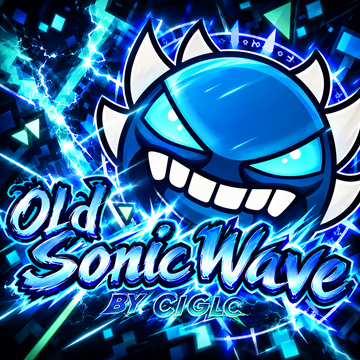
Geometry Dash Sonic Wave turns every second into a test of skill. Learn demanding patterns, control tight Wave sections, survive rapid transitions, and fight your way to the finish.
Some levels in Geometry Dash are made simply for fun, while others make you stop and wonder, "Can I actually beat this?" Geometry Dash Sonic Wave definitely belongs in the second category. With intense speed, tight Wave corridors, and a huge number of obstacles that leave almost no room for mistakes, Sonic Wave has become a memorable challenge for Geometry Dash fans.
The History of Sonic Wave
Sonic Wave was created by Cyclic during the Geometry Dash 1.9 era. Inspired by the Nine Circles style, the level features Sonic Blaster by F 777 as its soundtrack. From the moment it appeared, Sonic Wave caught the community's attention with its brutal gameplay and Wave sections that demanded an incredible level of precision.
The journey of Sonic Wave was not without controversy, especially surrounding its verification process. Sunix eventually completed the level legitimately in 2016, bringing Sonic Wave back into the spotlight. What started as a level surrounded by controversy gradually became a major part of Geometry Dash history and eventually reached the top of the Demonlist.
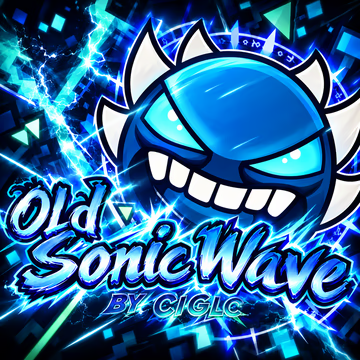
Enter Geometry Dash Sonic Wave and put your reflexes to the ultimate test
Sonic Wave Gameplay
The biggest reason for Sonic Wave's reputation is its fast paced gameplay, especially its extremely tight Wave sections. Players need more than quick reflexes. They must control every small movement because pressing even slightly too early or too late can end an entire run.
Notable Sections
0 to 11%:
The level starts with Cube gameplay featuring some tight timings before leading into a short maze section. This gives players a chance to get used to the rhythm before the real challenge begins.
11 to 22%:
A fast Ship section introduces sawblades, gravity portals, and narrow gaps. Players need to maintain steady control while reacting quickly to constant changes.
22 to 32%:
The Cube transitions into Ball and then Dual Ball gameplay. Gravity switches become more frequent, making precise timing much more important than simply relying on quick reactions.
32 to 54%:
The gameplay continues to mix Ball and Wave sections with several rapid transitions. This part requires players to stay focused and maintain consistent control for an extended period.
54 to 65%:
The pace becomes slightly more manageable with Cube gameplay and sequences of orbs. However, this is not the time to relax because even harder sections are still ahead.
65 to 76%:
This is one of the toughest parts of Sonic Wave. The Wave has to move through tight spaces filled with sawblades and Dual Wave sections, putting serious pressure on the player's control and accuracy.
76 to 88%:
A slower Mini Wave section leads into Cube memory gameplay. Instead of simply reacting to what appears on screen, players need to remember the path and execute each movement correctly.
88 to 100%:
The Final Wave pushes the challenge to its highest point with fast movement, narrow spaces, and multiple Mini Wave transitions. This is the ultimate test of the level, where staying calm is just as important as having the right skills.
How to Play Geometry Dash Sonic Wave
The gameplay of Sonic Wave has several similarities to Geometry Dash Switch. Players still rely on simple controls to guide their character through obstacles, but Sonic Wave demands a much higher level of precision.
Instead of constantly tapping based on instinct, players need to read the path ahead, memorize patterns, and carefully time every movement. In the tight Wave sections, even the smallest change in rhythm can send the character crashing into an obstacle.
How Is Sonic Wave Different From Polargeist?
Polargeist is the third main level in Geometry Dash, designed to help players learn Jump Rings, timing, and basic Ship gameplay. Its mechanics are relatively simple, making it a great choice for beginners.
In contrast, Sonic Wave is an Extreme Demon built around high speed, tight Wave corridors, gravity switches, and rapid transitions. It demands sharp reflexes, pattern memorization, and extremely precise control.
Simply put, Polargeist teaches the basics, while Sonic Wave puts those skills to the ultimate test. If Polargeist is an early step in your Geometry Dash journey, Sonic Wave is a serious challenge that rewards patience, practice, and precision.