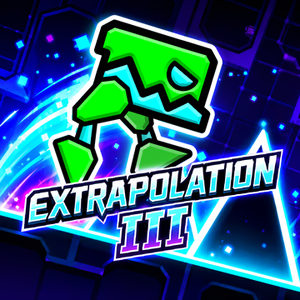
Step into Geometry Dash Extrapolation for a rhythm-fueled adventure where every second counts. Master gravity shifts, and keep pushing toward the finish!
What Is Geometry Dash Extrapolation?
When I started developing Geometry Dash Extrapolation, my goal was to create more than just a level that tests quick reflexes. I wanted to build an experience where every obstacle you overcome feels like a step forward. Inspired by the rhythm-based platforming style of the Geometry Dash series, the game combines familiar geometric shapes with dangerous traps, transformation portals, and constantly changing movement mechanics.
In this world, your character doesn't wait for you to get ready. It automatically rushes forward into corridors filled with spikes, moving platforms, and dangerous gaps. You only have a split second to observe your surroundings, judge the situation, and react. One mistimed jump or an inaccurate move can bring your entire run to an end.
However, failure isn't the end of the road. Every retry gives you a chance to memorize the level layout, recognize your mistakes, and find a better way forward. This cycle of challenge, failure, and improvement is what makes Geometry Dash Extrapolation so engaging, turning seemingly simple controls into a real test of focus and precision.
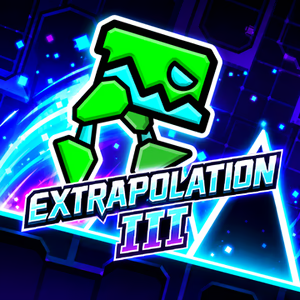
Every crash is a lesson in Geometry Dash Extrapolation
Geometry Dash Extrapolation Gameplay Mechanics
Instead of sticking to a single movement style from start to finish, Geometry Dash Extrapolation takes you through multiple character forms, each with its own controls. Every time you pass through a transformation portal, your approach to the obstacles ahead can change completely.
Cube - Jump Over Obstacles
Cube is a familiar character form, but its simple mechanics don't make the level any easier. You must time your jumps to clear spikes, gaps, and closely spaced platforms. Jump Orbs provide additional opportunities to jump, helping you reach areas that would be difficult to clear with a regular jump alone.
As your speed increases, timing becomes more important than ever. Pay attention to the distance between obstacles and learn the rhythm of your movement to avoid jumping too early or too late.
Ball - Flip Gravity
With Ball, the challenge shifts from controlling jump height to managing gravity. Each time you activate it, the character can switch between the floor and ceiling, opening up new paths while introducing fresh collision risks.
Watch the surrounding surfaces and choose the right moment to flip gravity. A well-timed move can help you clear an entire sequence of obstacles, while a poorly timed switch can send you straight into a trap.
Ship - Take Control of Flight
Ship offers a completely different way to move. Hold the button to fly upward, release it to descend, and keep adjusting your altitude as you navigate narrow corridors. Spikes and gears make every movement a test of control.
Rather than holding the button for too long or tapping repeatedly without thinking, use short, deliberate inputs. This approach is especially useful when you have only a small amount of space to maneuver.
Spider - Teleport Between Surfaces
Spider quickly switches between opposing surfaces, making timing a critical part of the challenge. You need to pay attention not only to your current position but also to where your character will appear after each activation.
Sections with spikes on both sides demand strong memory and precise reactions. In these moments, looking one step ahead is far more effective than waiting until an obstacle is right in front of you.
Robot - Control Your Jump Height
Robot adds another layer to the jumping mechanics by allowing you to vary your jump height depending on how you press and hold the button. A short jump may be enough to clear a low obstacle, while a longer jump is necessary to cross wider gaps.
When combined with portals that change your size or movement conditions, Robot forces you to adjust your inputs constantly. The goal isn't to jump as high as possible. It's to choose the right trajectory for the obstacle ahead.
How to Play Geometry Dash Extrapolation
Main Objective
Your goal in Geometry Dash Extrapolation is to guide your character through every obstacle and reach the end of the level without crashing. Along the way, you must adapt to transformation portals, gravity changes, and sections with different movement speeds.
Instead of expecting to finish on your first attempt, treat every run as an opportunity to learn the level layout. Once you memorize trap locations and understand each character's mechanics, you'll have a much better chance of making it farther.
Controls
The game uses a simple control system focused on pressing and releasing a button.
- On a computer, you can use the Spacebar, the Up Arrow key, or the left mouse button, depending on the version you're playing.
- On touchscreen devices, simply tap the screen to perform the corresponding action.
What Makes Geometry Dash Extrapolation So Challenging?
Sudden Gravity Changes
Gravity Orbs, Gravity Portals, and Gravity Pads introduce unexpected twists throughout the level. They can reverse gravity or affect your movement trajectory, forcing you to adapt almost instantly. If you focus only on your character and ignore the upcoming cues, you can easily hit spikes or fall into dangerous areas.
Increasing Movement Speed
Speed Portals reduce the time you have to react. Sections that seem manageable with a simple jump can become much harder when your character moves faster. Ship sections are especially demanding because an overly strong input can throw off your altitude in an instant. The best approach is to look ahead, learn the movement rhythm, and avoid making repeated inputs without a clear plan.
Constant Character Transformations
The biggest challenge isn't any single mechanic. It's switching between them. One moment, you may be timing a Cube jump; the next, you're flipping gravity with Ball and then guiding Ship through a narrow corridor.
Every transformation requires you to adjust your thinking and reactions. With practice, you'll become better at recognizing level patterns and preparing for what's coming instead of reacting only when danger appears.
Conclusion
Geometry Dash Extrapolation shows how a game can deliver a serious challenge through a handful of simple actions. Every failure teaches you something new, while every obstacle you overcome reflects your growing skill and persistence. If you enjoy games that demand quick reflexes, strong memory, and precise timing, keep the rhythm going with Geometry Dash Polargeist and discover how far you can go in another exciting challenge!